
If you’re looking for space...
you’ve come to the right place!




When you’re planning
to lease or buy,
call Steve Cross...
Steve's YOUR guy!
to lease or buy,
call Steve Cross...
Steve's YOUR guy!
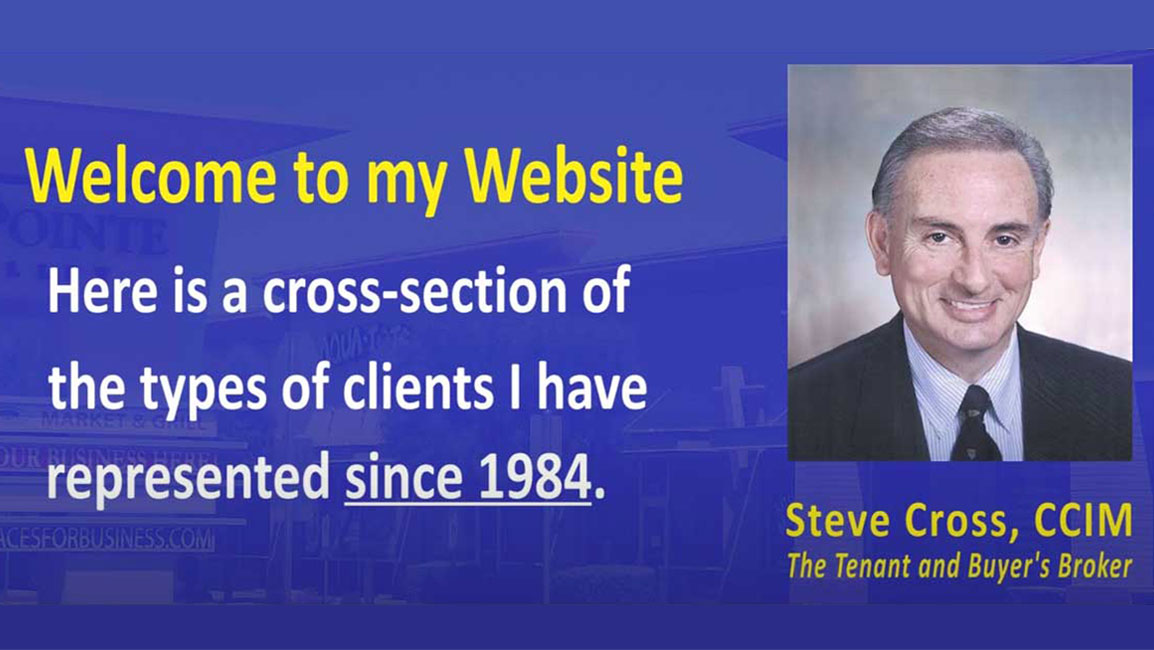
I'm STEVE CROSS, CCIM
The Tenant’s and Buyer’s Advocate
I work exclusively for the benefit of
commercial tenants and buyers.
- Tenant and Buyer Representation
- Lease and Purchase Negotiations
- Renewals and Renegotiations
- Income and Investment Property
- Expert Opinions/Trial Testimony
- Tenant and Buyer Representation
- Lease and Purchase Negotiations
- Renewals and Renegotiations
- Income and Investment Property
- Expert Opinions/Trial Testimony
- Tenant and Buyer Representation
- Lease and Purchase Negotiations
- Renewals and Renegotiations
- Income and Investment Property
- Expert Opinions/Trial Testimony
I'm STEVE CROSS, CCIM
The Tenant’s and Buyer’s Advocate
I work exclusively for the benefit of
commercial tenants and buyers.
- Tenant and Buyer Representation
- Lease and Purchase Negotiations
- Renewals and Renegotiations
- Income and Investment Property
- Expert Opinions/Trial Testimony
- Tenant and Buyer Representation
- Lease and Purchase Negotiations
- Renewals and Renegotiations
- Income and Investment Property
- Expert Opinions/Trial Testimony
- Tenant and Buyer Representation
- Lease and Purchase Negotiations
- Renewals and Renegotiations
- Income and Investment Property
- Expert Opinions/Trial Testimony
Benefits of using Steve Cross, the Tenant’s and Buyer’s Advocate:
EXPERIENCE, KNOWLEDGE and INSIGHTS: Since 1984 I’ve helped over 2,700 businesses, healthcare professionals, municipalities and investors solve their real estate problems. Whether leasing or buying – I can help you.
I WORK FOR YOU: I specialize in commercial tenant and buyer representation. Because I do not ‘list’ properties conflicts of interest are eliminated and I am a tenacious advocate for my clients. Your choices, circumstances and strategies remain confidential... and that gives you leverage at the bargaining table.
SHARED VALUES AND OBJECTIVES: I’ve leased space for my business and own income-producing commercial property, which I manage. As a result, my perspectives are aligned with the values and objectives of my clients seeking to minimize occupancy costs and negotiate favorable terms and conditions.
WHAT’S THE COST? On most new leases and purchases I’m paid by sharing commissions received by the listing broker - so expert representation typically cost you nothing. Consulting services are fee-based.
I WORK FOR YOU: I specialize in commercial tenant and buyer representation. Because I do not ‘list’ properties conflicts of interest are eliminated and I am a tenacious advocate for my clients. Your choices, circumstances and strategies remain confidential... and that gives you leverage at the bargaining table.
SHARED VALUES AND OBJECTIVES: I’ve leased space for my business and own income-producing commercial property, which I manage. As a result, my perspectives are aligned with the values and objectives of my clients seeking to minimize occupancy costs and negotiate favorable terms and conditions.
WHAT’S THE COST? On most new leases and purchases I’m paid by sharing commissions received by the listing broker - so expert representation typically cost you nothing. Consulting services are fee-based.
